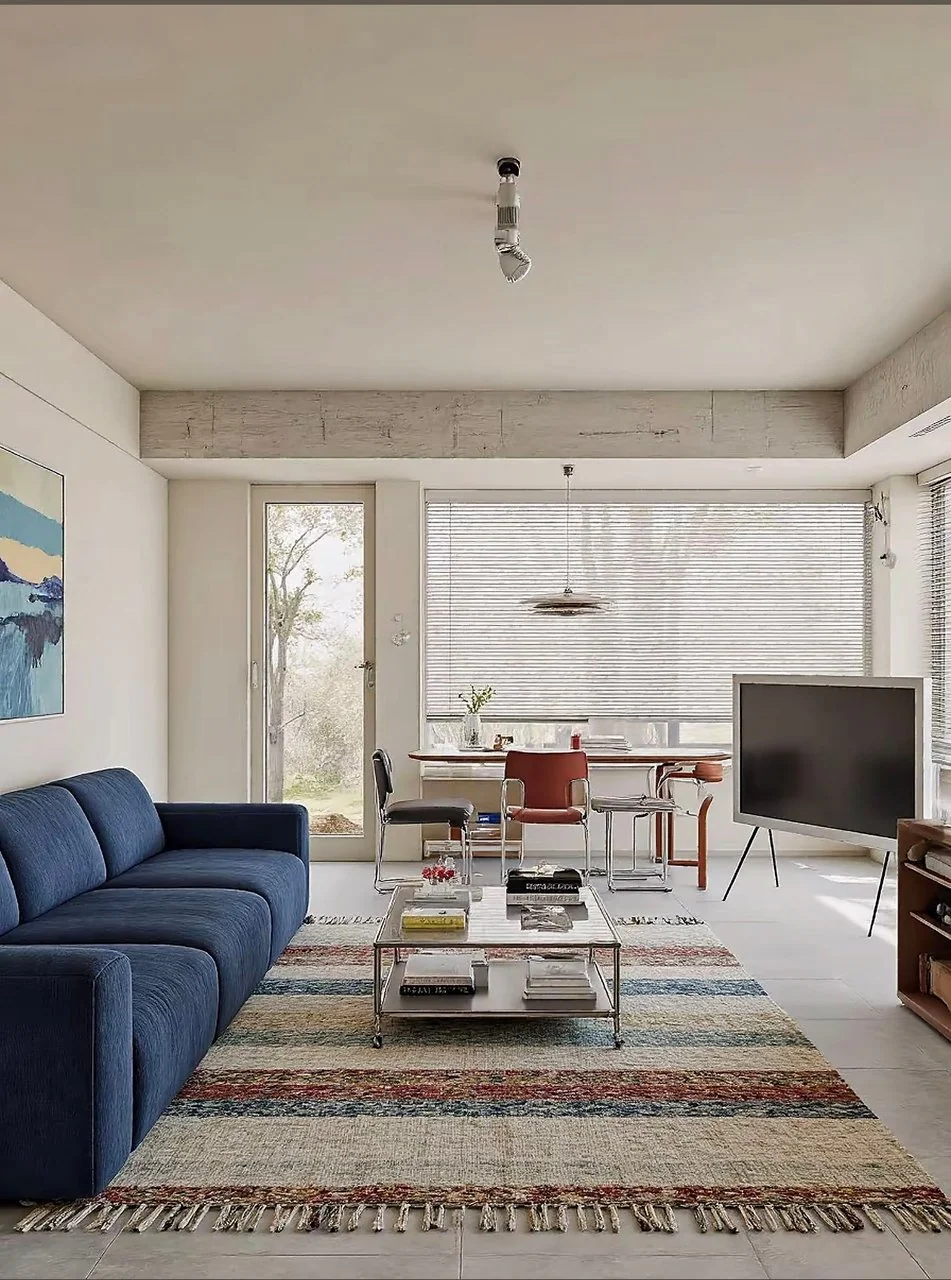
Choose the jobs your space needs to do
List the activities that matter most: eating, working, relaxing, hosting or storing everyday belongings. Then decide where each one belongs. A room does not need a separate furniture piece for every activity. A table might serve for meals and occasional work, provided its height, seating and storage suit both. Focus on your actual routine before borrowing an arrangement from a larger apartment.
Check fit beyond the furniture footprint
Measure existing pieces before deciding they need replacing. Mark possible positions on the floor and test the routes between doors, seating and storage. Include space to open drawers, pull out chairs and use the furniture comfortably. If you use a mobility aid or have specific access needs, account for those directly. A photograph alone cannot establish clearances, and a visual concept is not a measured floor plan.
Connect the areas you can see together
Choose a few colors or materials to repeat across adjoining areas. The dining chairs and sofa do not need to match, but a shared accent color, wood tone or fabric texture can connect them. Keep the existing floor in view when you compare options. If gray flooring is staying, explore how cream, wood, muted color or darker details look beside its actual undertone instead of choosing everything in another shade of gray.
Give everyday belongings a useful home
Choose storage for what you own, rather than for an imagined tidy lifestyle. Check the dimensions of books, baskets and devices against shelves and drawers. Closed storage may suit items you do not enjoy looking at; open shelves can hold things you use or want to display. Follow the manufacturer’s installation and anchoring instructions, and check rental permission before attaching anything to a wall.
Compare two approaches before buying
One direction might use a restrained palette and a few substantial pieces. Another might use color and pattern while keeping the arrangement simple. Neither is automatically right for every small room. Take photos from the entrance and your usual seated position to see how the choices relate. Clear one crowded surface or move an existing piece first, then decide what is still missing.