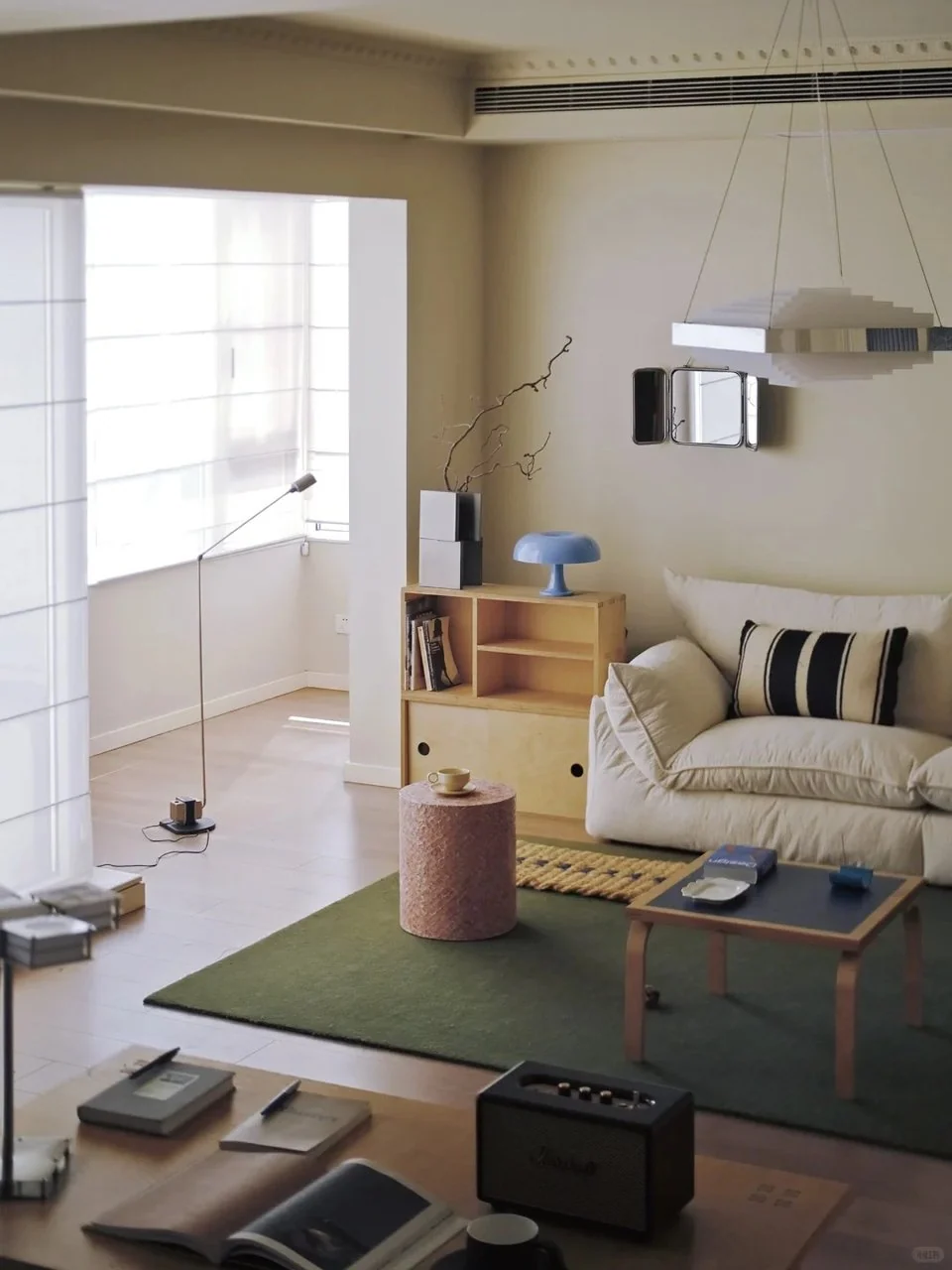
Name the change you actually want
“Make it nicer” leaves too many decisions open. Try a clearer goal: a lighter room around a dark sofa, a relaxed space for evenings, or a more collected look with art and color. These goals can lead to different choices in the same room. Save a few references and write down what attracts you to each: the contrast, the textures or the amount of color.
Start with the pieces that are staying
Look at your largest fixed surfaces together: flooring, walls, sofa and any wood furniture. A brown sofa does not require an entirely brown room. You could explore soft neutrals with textured fabrics, green accents with natural materials, or a quieter palette with dark details. Treat these as starting points to compare. Check fabric and rug samples beside your actual furniture, since photographs and screens can shift their color.
Bring the seating area together
A rug can help the sofa, chairs and table feel like one group. Before choosing a size, measure the arrangement and mark the proposed rug outline on the floor with removable tape suitable for that surface. Check door swings and the routes you use every day. A pleasing concept image cannot confirm that a rug or table will fit your room.
Repeat a few choices, with variation
Pick a small set of colors or materials to carry through the room. A color in a print might return in a cushion; a wood tone might appear again in a frame. Everything does not need to match. Leave some plain surfaces between patterns, and group smaller objects where they have a purpose. If the room feels busy, try moving accessories out before adding another purchase.
Review the room in the light you use
Look at the room in daylight and during your usual evening routine. Notice where you read, where reflections bother you and which corners feel dim. A table or floor lamp may make those areas more useful. Choose bulbs and fixtures that suit their rated specifications, and judge the atmosphere in your own room rather than relying on a screen image.