Describe the evening you want to have
Imagine how you would like to use the room: reading alone, listening to music, talking with friends or relaxing with a film. Write down both an activity and a visual feeling, such as “reading in a calm room with a little green” or “conversation in a rich, colorful room.” This helps distinguish atmosphere from practical needs. A chair that looks soft might not be comfortable for you; a lamp that creates a pleasant glow might not provide enough reading light. Let the look support your actual routine rather than substitute for it.
For a calm room, give a few elements a clear role
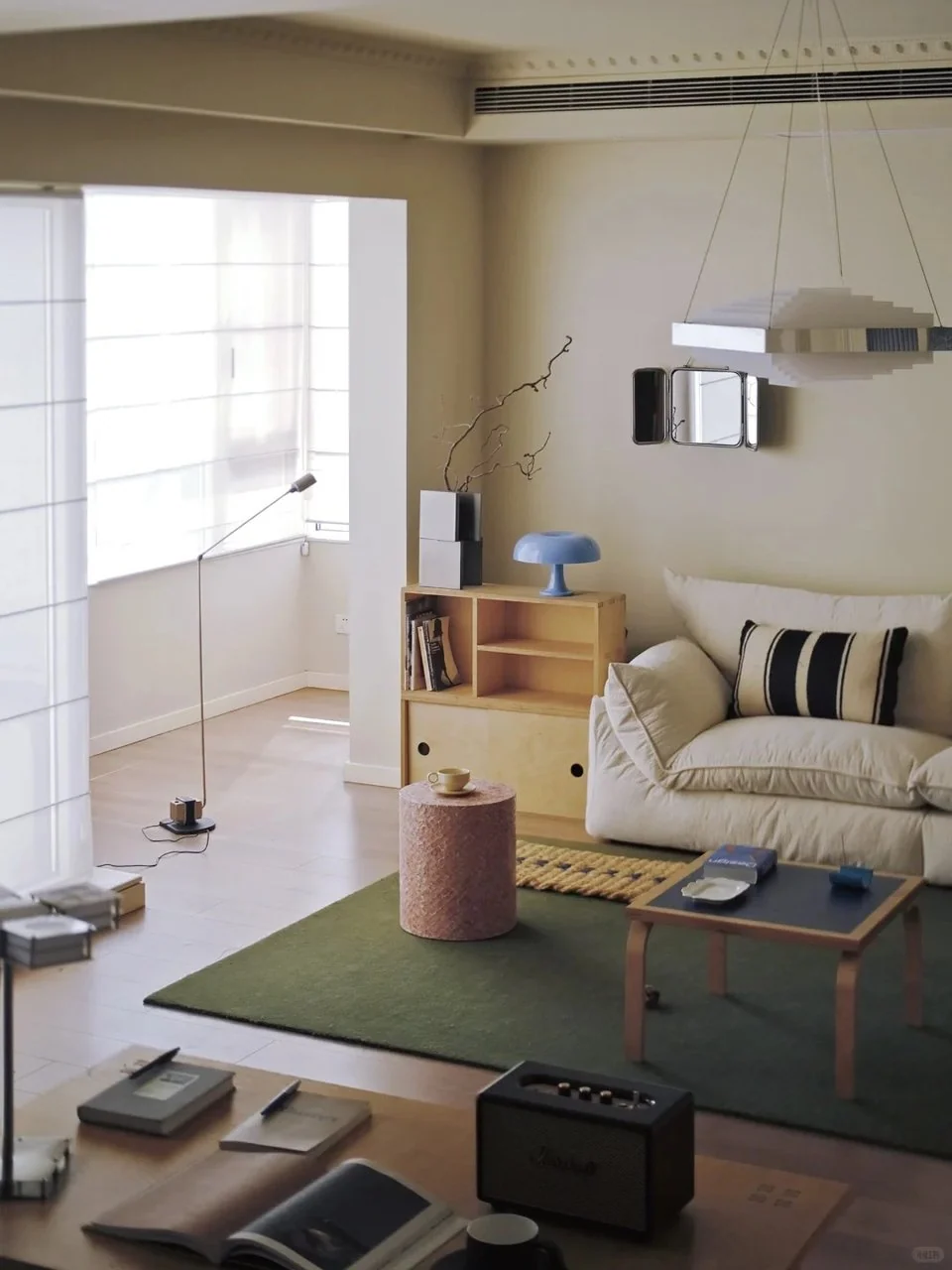
The olive-rug reference uses a cream sofa, a broad green rug, wood furniture and a small blue lamp. The rug gives the mostly pale room a distinct center. A striped cushion and textured pieces introduce variation without covering every surface in pattern. The room can feel inviting while keeping a restrained palette. If this appeals to you, choose one larger color or texture you enjoy and let the surrounding surfaces stay quieter. You can explore the relationship with different colors; olive green is one answer shown here, not a requirement for calm.
For a moody room, keep the details readable
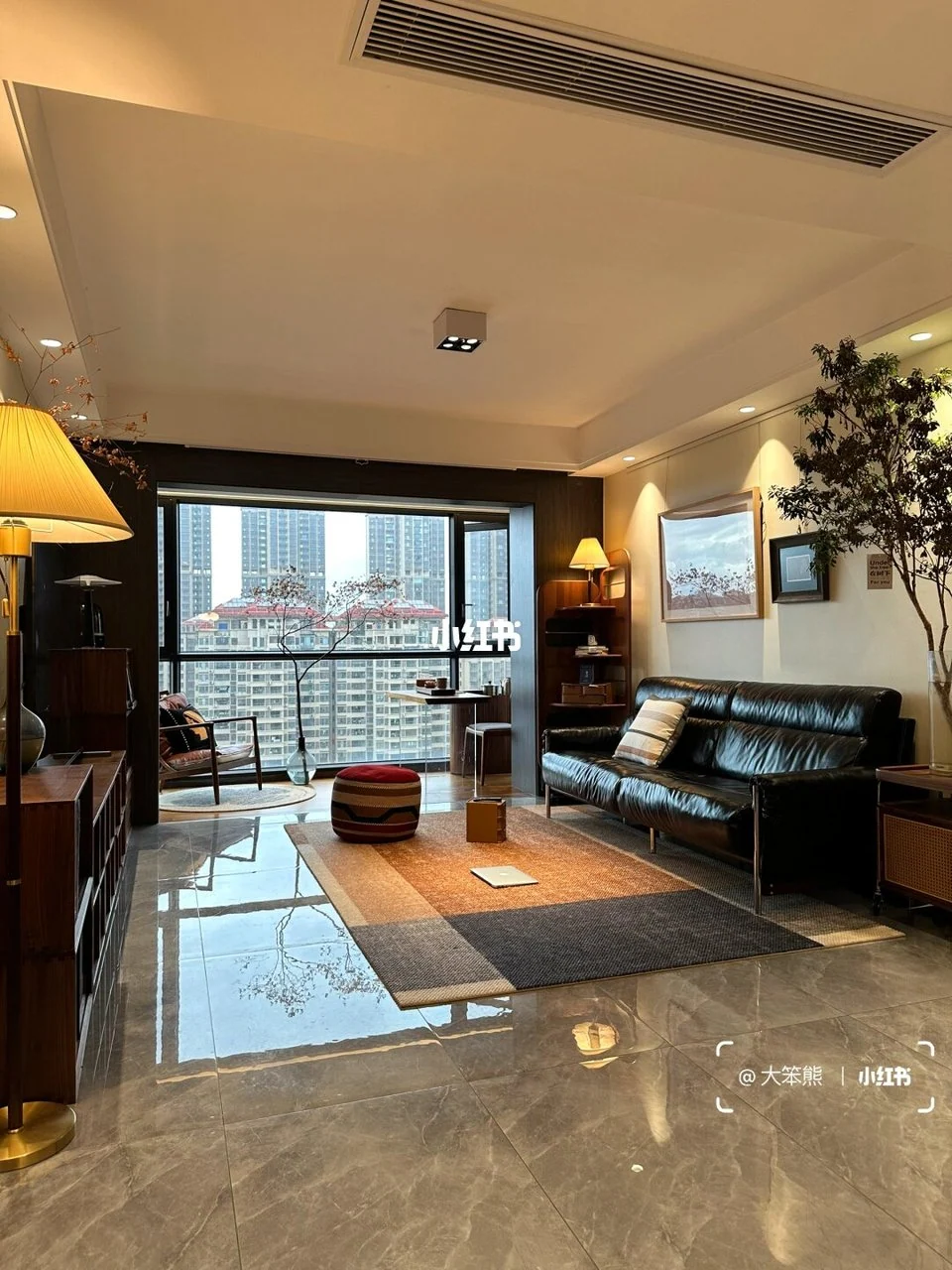
In the gray-tile and amber-light reference, black seating and dark wood form a deeper background. The rug’s rust and cream areas, pale cushion, artwork and shaded lamps remain distinct within it. The image shows an intimate visual atmosphere without making everything the same dark value. If you want a similar mood, compare where lighter textiles or illuminated surfaces would give the eye a point to settle. Judge it in your actual room after dark. A pleasing photograph does not confirm sufficient light for reading, moving around or another activity you need the room to support.
For a colorful room, connect patterns instead of collecting them
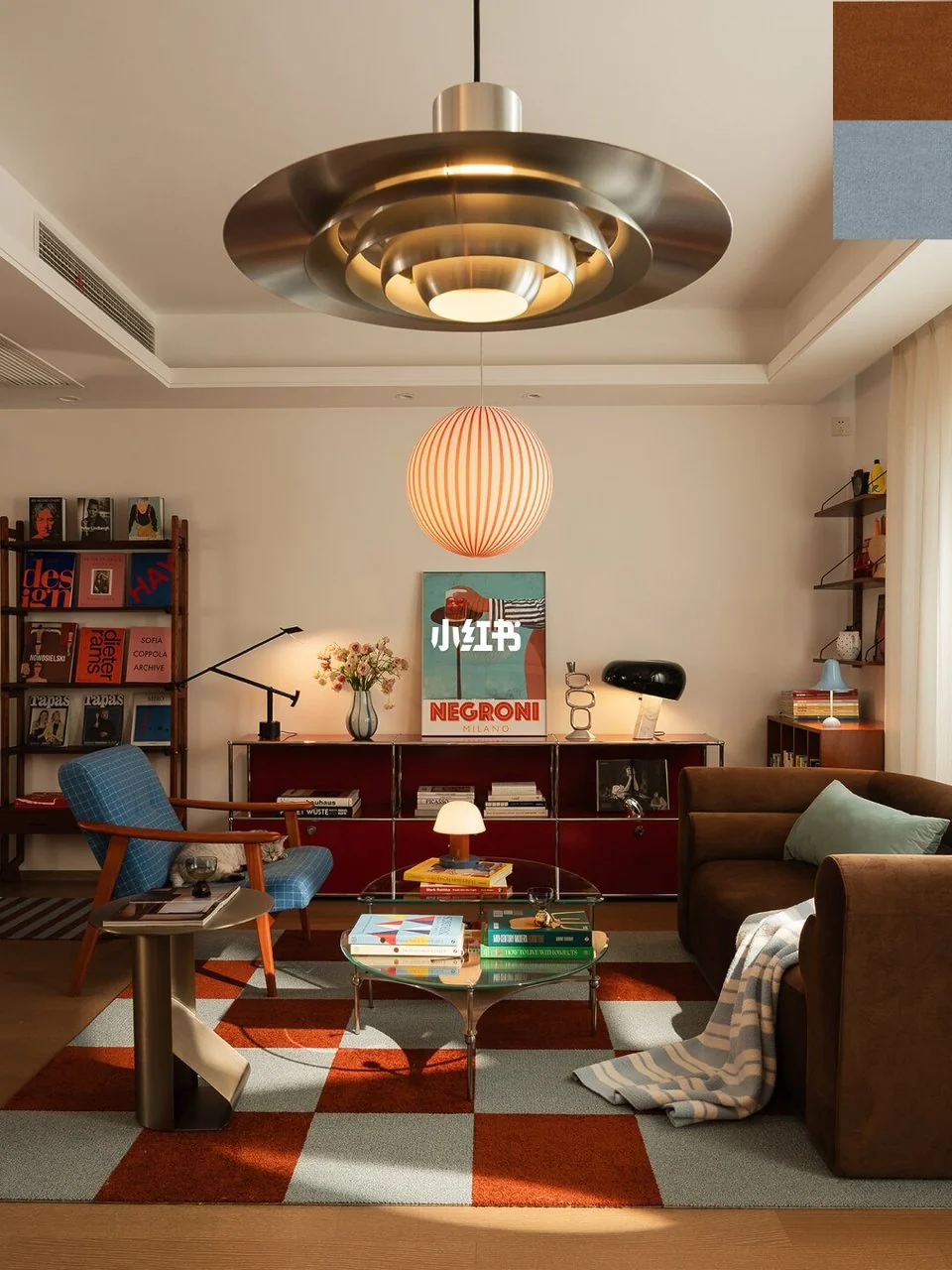
The brown-sofa checkerboard reference combines a blue chair, rust and blue-gray rug, burgundy storage and striped lighting. The colors recur, while the rug squares and smaller stripes operate at different scales. Light curtains provide a plain area alongside the richer pieces. If you love color, decide which element should lead: the rug, a sofa or artwork. Then choose supporting details that relate to it. A room can feel cozy and expressive without every object matching; it helps when you can identify why the main pieces belong together.
Use texture where it changes the view or your experience
Compare the smooth, shiny, rough and soft surfaces you already have. A textile on a hard-looking seating group can change its appearance; a woven rug can provide contrast beside a glass table. You do not need a throw on every chair or a cushion in every available space. If the room feels flat, try one distinct texture and look again. For comfort, cleaning and daily use, check the actual material and care information. A photographed fabric texture cannot establish its fiber, softness, washability or suitability for children and pets.
Let lighting serve more than one moment
Look at the room in daylight and during your usual evening routine. Notice whether the whole room is equally bright or whether some surfaces provide softer points of interest. Try an existing lamp in a different suitable position, with safe outlet access, and compare the atmosphere from your seat. You might want brighter light for a task and a quieter setting later. Keep enough light for each activity and check compatible bulbs and fixture ratings. The reference images show visible lighting effects; they do not supply a lighting plan or tell you how many fixtures your room needs.
Identify what feels unfinished before filling the space
An empty wall, unrelated furniture and a crowded coffee table call for different responses. From the doorway, notice what draws your eye first and whether the room has a clear center. From your seat, notice the view you experience most. If the wall above the sofa feels disconnected, compare artwork or an arrangement that relates to the seating. If several patterned pieces compete, remove or relocate one temporarily. If the room is visually quiet but feels anonymous, try a meaningful object or artwork before buying several generic accessories. Take another photograph after one change so you can judge what it actually contributes.
Keep a place for the things that make it yours
Books, collected art, a favorite mug or inherited furniture can give the room a recognizable character. Decide which things you want to see and which everyday items need an easy place to return to. Group a few objects where you enjoy them, leaving useful surfaces for the activities you described at the start. You can choose abundance or restraint; both benefit from clear relationships. Before adding furniture, check its fit and how you will use it. A visual concept can help you compare the atmosphere, but comfort and practical fit still need your own checks.
STYLE REFERENCES IN THIS GUIDE
Explore the visible design choices in these library rooms.