Start with your decision, not a shopping list
If you are considering a sofa, compare its upholstery sample with your flooring and the largest pieces you expect to keep. If the sofa is already yours, decide whether you want it to stand out or sit quietly within the room. You may want a light, calm setting; a room rich in wood and texture; or a colorful mix with a strong rug. Those are different goals, even when the sofa stays identical. Save references for the relationships you like rather than for a product you hope to copy.
- Considering a purchase: compare the sofa color and silhouette alongside the rest of the room before committing.
- Keeping an existing sofa: choose what to change around it and what else is staying.
- Building a brown palette on purpose: decide where contrasting light, texture or color will give it variety.
Read this brown in this room
Brown covers caramel, reddish brown, muted taupe and near-black shades. Look at your sofa beside a plain light fabric and the floor; notice whether it appears more red, yellow or gray by comparison. Check it in daylight and under your usual evening lights. A textured fabric can reveal several tones across its surface. A smooth or shiny surface shows highlights differently. A close-up photograph is useful, but it cannot establish the exact color, material or feel of an unfamiliar sofa. For a purchase, use the supplier’s material details and a physical sample where possible.
For a lighter room, change the contrast around the sofa
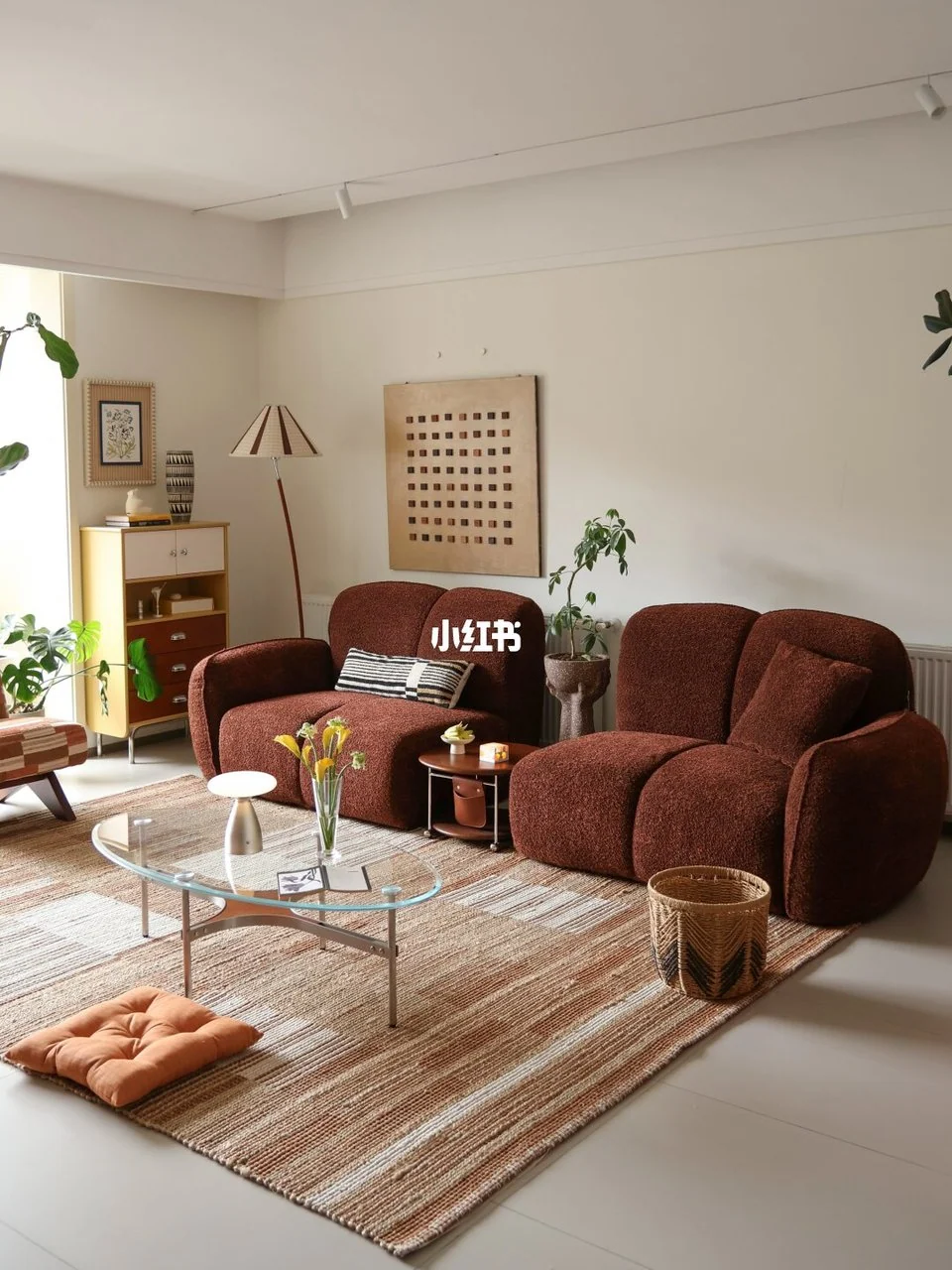
In the main reference, reddish brown seating is surrounded by a tan and pale striped rug, light walls and a glass table on slim metal legs. The rug introduces a broad lighter surface beneath the seating. The transparent table leaves its stripes visible, so another solid dark block does not compete with the sofa. A striped cushion, a pleated shade and a woven basket add variety within the mostly neutral palette. You could borrow the light-versus-dark relationship with different furniture. You do not need to reproduce the table material or the exact rug to explore that idea.
For an earthy room, separate similar warm tones
The “Warm wood, soft brown seating” reference puts a textured brown sofa beside warm wood flooring and a wood coffee table. A pale rug gives those brown surfaces a clear break. The sofa and floor can belong to the same warm family without appearing to merge into one large area. Green plants and a checked cushion add smaller variations. When considering a similar direction, compare a rug against both the sofa and the floor. If the whole group feels flat, try a lighter or darker value, or a more distinct texture, before adding more decorative objects.
For a colorful room, let a shared element connect the pieces
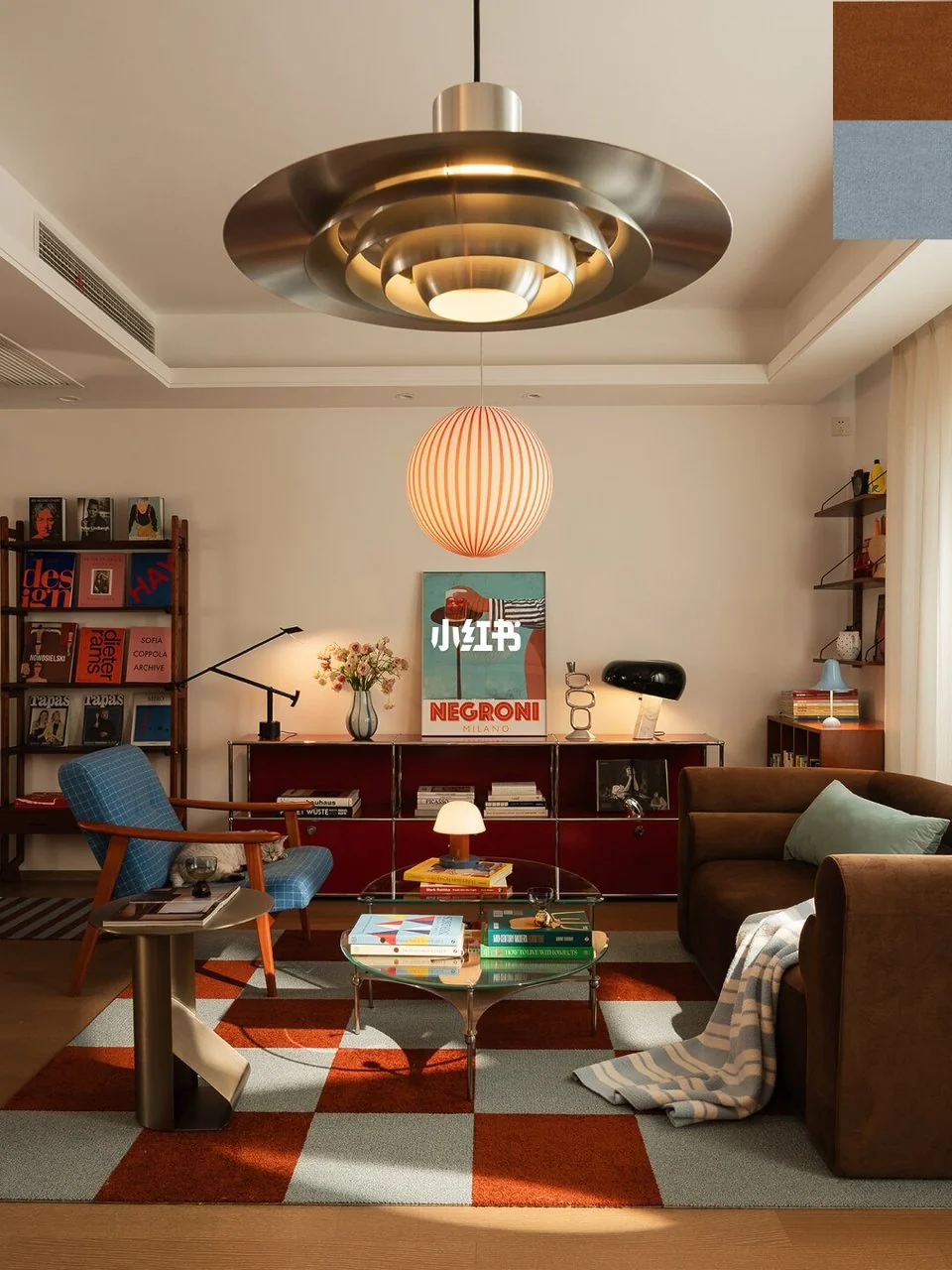
In “Brown, blue and a checkerboard,” a blue armchair and brown sofa share a rug with rust and blue-gray squares. The rug contains a connection to each seat. Burgundy storage and striped paper lighting repeat parts of that warm palette elsewhere, while light curtains leave a quieter background. This is a useful approach when you like different furniture styles or want a chair that contrasts with the sofa. Look for one element that relates to both pieces; it might be a rug, artwork or a fabric. Similar colors alone will not settle every decision, so compare the pattern size and the visual weight of the pieces too.
Choose the rug and wood furniture together
A rug appears beside the sofa, floor and coffee table at once. View candidates in that whole group. A plain pale rug emphasizes dark seating; stripes add direction; a large geometric pattern can become a focal point in its own right. With wood furniture, compare depth of color, grain and sheen rather than trying to match every piece exactly. A small dark table can make a deliberate contrast in a light room. If both the sofa and table are large and dark, consider whether the surrounding surfaces give them enough separation for the look you want.
Use cushions and art to reinforce the choice
After choosing the main relationship, smaller details become easier to judge. In a quiet direction, a stripe or a different fabric texture may be enough. In a colorful direction, bring one color from the rug into a cushion or artwork, then leave some plain areas around it. Test what you own before buying a full set of accessories. Photograph the room from the doorway and the sofa’s opposite side. If each corner seems to tell a different story, repeat one chosen color or material where it is missing instead of adding another unrelated accent.
Check the real item before you buy
A visually appealing combination does not confirm furniture fit, upholstery durability or comfort. Measure the sofa and proposed pieces, including access, doors and the space needed to use them. Read the actual fabric and care information for your household. Compare rug and upholstery samples beside the existing finishes, and review return terms before ordering. A concept image helps you judge a direction; it cannot verify that a pictured material is available or that a product will behave the way you need it to.
STYLE REFERENCES IN THIS GUIDE
Explore the visible design choices in these library rooms.